


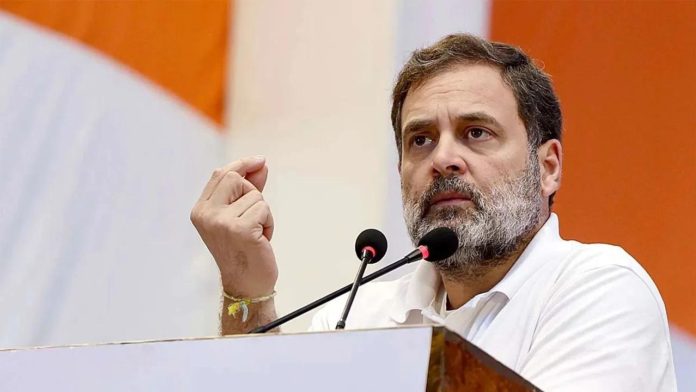
Congress leader Rahul Gandhi made a bold claim on Wednesday, stating that every sixth BJP MP in the Lok Sabha secured their seat through ‘vote chori’ or electoral theft, suggesting they deserve the label of ‘ghuspethiya’ as per the party’s own nomenclature. This assertion raises questions regarding the integrity of the electoral process in India.
Gandhi’s remarks arrived in the wake of escalating tensions between the Congress and the ruling BJP, as he asserted that the BJP would struggle to win even 140 seats if fair elections were conducted in the current political landscape. His comments are part of a larger critique of the BJP’s governance and electoral strategy.
“Vote theft occurs at times by stealing individual seats and at other times, an entire government,” Gandhi stated while addressing his social media followers on X. He emphasized that out of the 240 BJP MPs in the Lok Sabha, approximately 40 MPs directly benefited from vote chori.
“They are not hard to identify. Should we, in the BJP’s own parlance, label them ‘ghuspethiya’? What can we say about Haryana? The entire government is an ‘ghuspethiya’. The institutions they control manipulate voter lists and distort the electoral process, becoming ‘remote-controlled’ entities,” he expressed, intensifying his criticism of the BJP.
In past statements, Gandhi had labeled the BJP’s victories in the Bengal and Assam assembly polls as a “theft” of the voters’ mandate. He described these outcomes as detrimental to Indian democracy and indicative of a larger mission by the BJP to undermine democratic principles.
He urged his followers to prioritize the well-being of the country over petty political rivalries. “This is not about one party or another. This is about India,” Gandhi reiterated.
The BJP recently ousted Trinamool Congress from power in West Bengal and claimed victory for the third consecutive term in Assam during the assembly election results declared on Monday. These results signify a critical reflection of the shifting political dynamics in the country and raise questions about the future of opposition parties.